

A White-Hat possesses the same technical skills as a Black-Hat, but uses their expertise to defend, not attack. They are hackers with professional ethics.
Definition: What is a White-Hat?
A White-Hat (or ethical hacker) is a cybersecurity expert who performs authorized penetration tests and security audits to identify system vulnerabilities before cybercriminals can exploit them.Characteristics of a White-Hat
- ✅ Legality: Always works with written authorization (contract, defined scope)
- ✅ Ethics: Respects confidentiality, does not publicly disclose vulnerabilities
- ✅ Transparency: Documents all findings in a detailed report
- ✅ Training: Holds recognized certifications (OSCP, CEH, CISSP)
- ✅ Objective: To help companies protect themselves, not compromise them
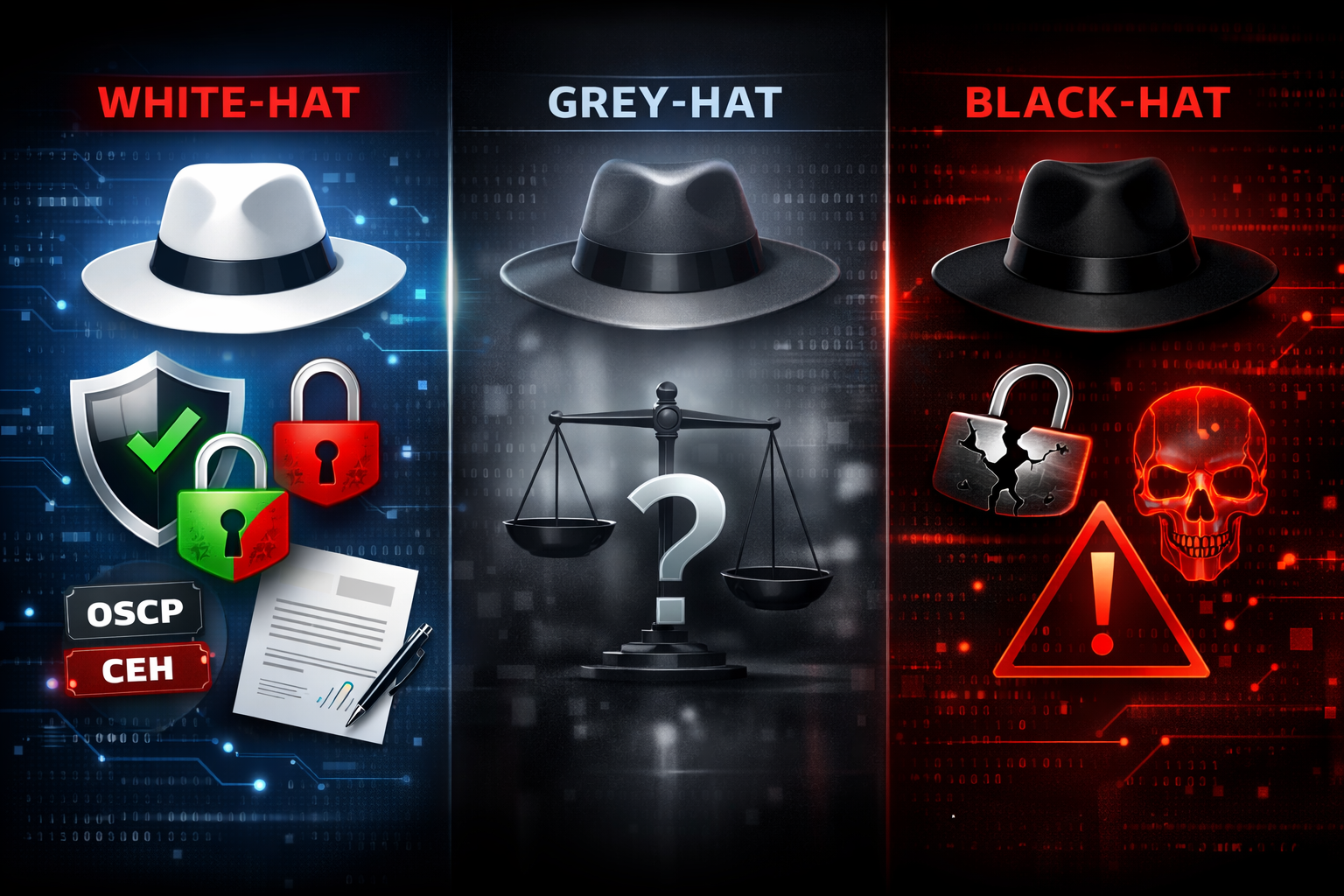
White-Hat vs. Black-Hat vs. Grey-Hat: What Are the Differences?
In the hacking world, there are three categories of hackers based on their ethics and intentions:🤍 White-Hat - The Defender
Who are they?: Cybersecurity professionals who work legally to protect systems. Missions:- Authorized penetration testing (pentesting)
- Security and compliance audits
- Identifying vulnerabilities before cybercriminals do
- Infrastructure security consulting
🖤 Black-Hat - The Attacker
Who are they?: Cybercriminals who exploit vulnerabilities for malicious and illegal purposes. Actions:- Unauthorized system hacking
- Theft of sensitive data (customers, credit cards)
- Ransomware and extortion
- Selling data on the dark web
- Denial of Service (DDoS)
⚪⚫ Grey-Hat: Between Legality and Illegality
Who are they?: Hackers who operate in a gray area between legality and illegality. Typical behavior:- Discover vulnerabilities without authorization
- Contact the company to warn them (sometimes for a fee)
- May publicly disclose the vulnerability if the company does not respond
- Mixed motivations: altruism, recognition, sometimes remuneration

Why Hire a White-Hat for Your Business?
In a context where 73% of French SMEs experienced at least one cyberattack in 2025, hiring a White-Hat is no longer a luxury, but a strategic necessity.The Concrete Benefits of a White-Hat
1. Proactive Vulnerability Detection A White-Hat identifies vulnerabilities before a Black-Hat can exploit them. It's like testing the strength of your safe before a burglar breaks in. 2. Regulatory Compliance Certain regulations (GDPR, ISO 27001, NIS) require regular security audits. A certified White-Hat helps you stay compliant and avoid fines. 3. Reputation Protection A customer data breach can destroy a company's reputation in hours. A White-Hat prevents these disasters before they happen.4. Long-Term Savings The average cost of a cyberattack for an SME is €250,000. A security audit by a White-Hat costs between €1,000 and €10,000. The return on investment is clear. 5. Expertise and Certifications White-Hats hold globally recognized certifications:- OSCP (Offensive Security Certified Professional)
- CEH (Certified Ethical Hacker)
- CISSP (Certified Information Systems Security Professional)
- OSEP, CRTO, GXPN (advanced certifications)
When to Hire a White-Hat?
- ✅ Before a launch: Website, application, new online service
- ✅ After an incident: To understand how you were compromised
- ✅ Regularly: Annual audit to stay protected (threats are constantly evolving)
- ✅ For compliance: GDPR, ISO 27001, HDS, PCI-DSS